‘Tis the season for monarch butterflies in my garden, a broad oasis for butterflies, hummingbirds, pollinators, and passer-by.
For the last several weeks, a solitary monarch has lived here, finding a diversity of blooms and milkweed. Stopping each day in the garden outside my office, it finds the flowers there and flutters on. The only thing lacking was company of its kind.
Four days ago, another monarch arrived. They floated and gamboled high in the sky, and there is no more beautiful sight. Together and apart, they worked their way around the gardens. Yesterday, I watched them follow each other, first one, then the other, to the many tithonia growing here.
Today, expecting to see the two of them, there was only, again, a solitary monarch. I walked to each part of the garden, expecting to see another butterfly lift off, but only a singular monarch floated above and 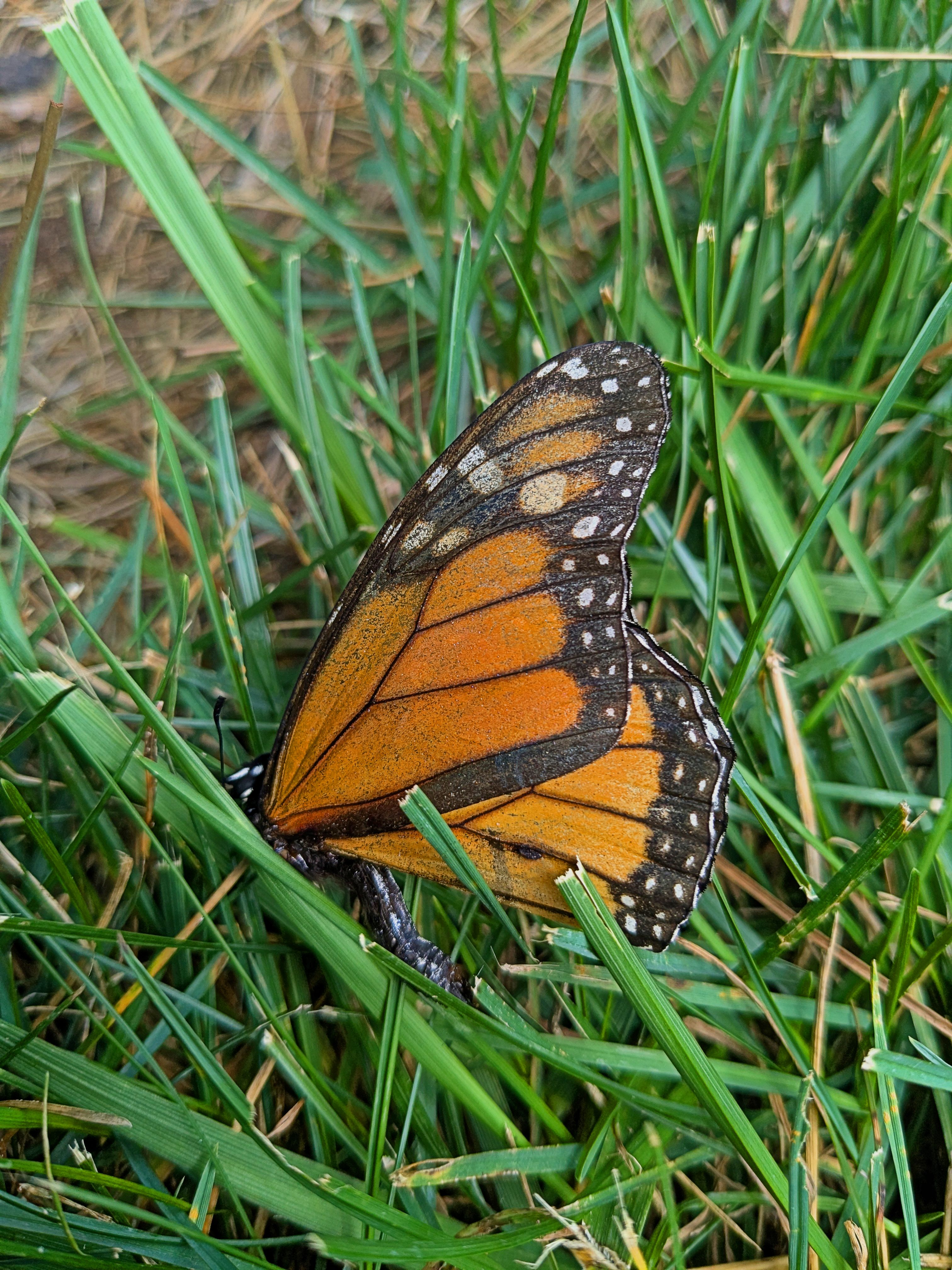 beyond me as I walked.
Rounding on another garden, I saw a bit of orange in the grass. Still and lifeless, a monarch butterfly lay as if it had fluttered softly down and passed on. From the wear on its wings, my guess is that it was the monarch that waited. A few brilliant days with good company, and its brief two-to-five-week lifespan ended.
Threatened by habitat loss, pesticide use, and climate change, the population of eastern monarchs has declined by more than 80 percent, according to the World Wildlife Federation. The monarch butterfly was classified as endangered by the International Union for Conservation of Nature (IUCN) in 2022. The US Fish & Wildlife Service proposed the monarch butterfly for protection under the Endangered Species Act in December 2024.
Unlike so many ecological crises, there are positive steps individuals can take to help save the monarchs. With even a small space you can plant a few milkweeds or create a Monarch Waystation. Many of the milkweed and nectar plants that support the monarch life cycle are inexpensive, easy to grow, resilient and drought-resistant once established.
Among other resources, Monarch Watch is a great information and citizen science website established at the University of Kansas in 1992. As of August, 2025, there are 52,932 registered Monarch Waystations across the US. Check out the sites in your state. While the migration of monarch butterflies used to darken the sky as they passed by, today the existence of the butterfly is in question. Maybe, with enough help, they will survive.
The newly arrived monarch has taken up residence. It flits and floats, maybe it hopes. I know I do.
* * *
Epilogue: The next day, another monarch arrived. In the days that followed, there were as many as four at a time in different gardens. And more are rising from the garden itself, the last generation of the season, which will live six to nine months if they survive their autumn migration of almost 3,000 miles to central Mexico. Godspeed.
 Shouldn't...but Do